
Tooth replacement
Complete Dentures for a Natural-Looking Smile
Losing multiple or all teeth can affect much more than appearance. Eating, speaking and social confidence can become challenging. Complete dentures can be one of the treatment options for patients who have lost all teeth in an arch; the appropriate solution depends on individual oral health, anatomy, expectations and clinical assessment.
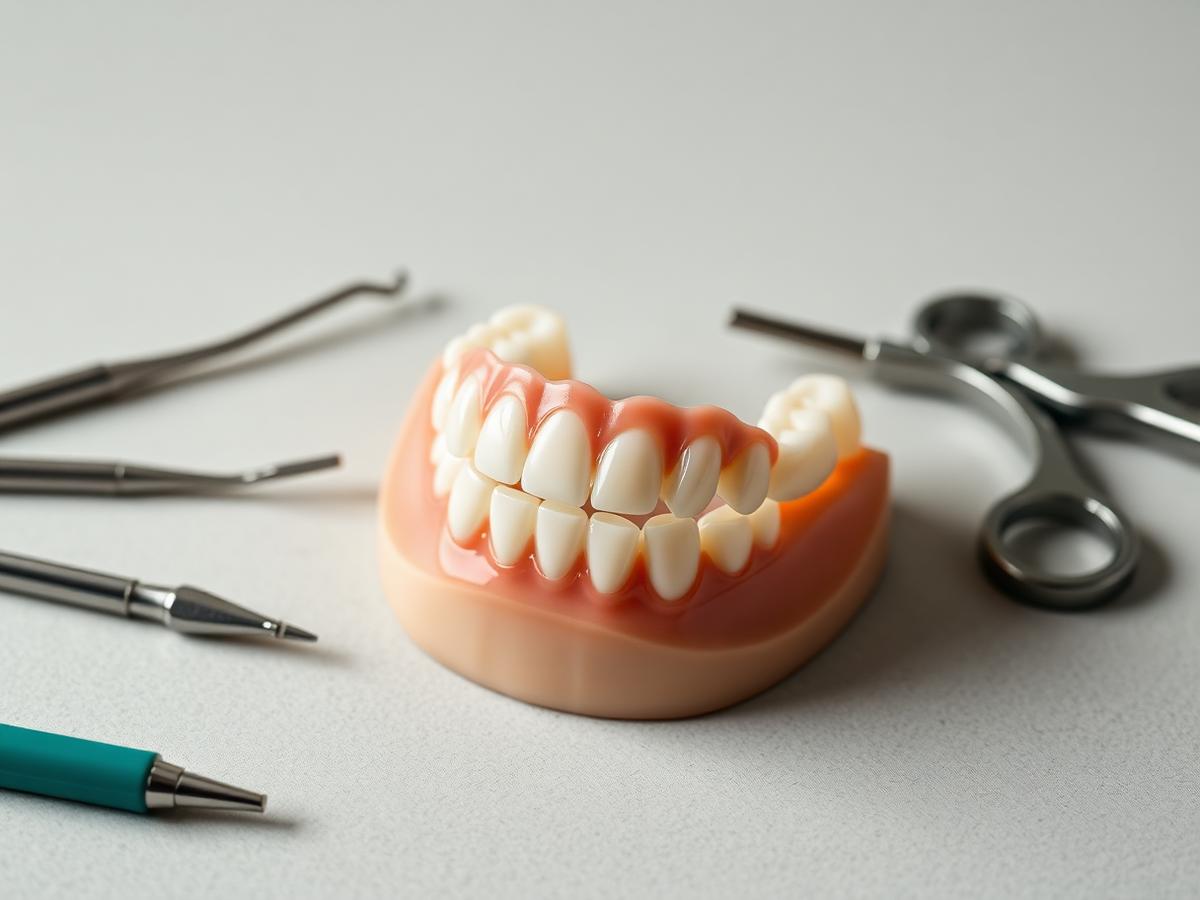
What Are Complete Dentures?
A complete denture is a removable prosthesis that replaces all the teeth in one arch — upper, lower or both. It rests on the gum and the underlying bone ridge and is shaped to restore chewing as well as support for the lips and cheeks.
Who May Need Complete Dentures?
Complete dentures may be considered for patients who have lost all teeth in an arch, or where remaining teeth cannot be retained. Suitability depends on gum and bone condition, general health, and individual expectations, all of which are assessed during consultation.
Upper Complete Dentures
An upper denture covers the palate, which usually contributes to its retention. Speech and taste can feel different initially and generally improve as you adapt.
Lower Complete Dentures
A lower denture has a smaller supporting area and must accommodate the tongue and surrounding muscles. Careful impressions and adjustment are especially important here, and in some cases an implant-supported option may be discussed.
What Makes a Denture Comfortable?
Comfort comes from accurate impressions, a correctly recorded bite, appropriate tooth positioning, well-finished borders, and review appointments to adjust pressure points as the tissues settle.
What Can You Expect During Treatment?
Treatment usually spans several appointments: examination and assessment, impressions, jaw relation records, a trial stage where appearance and bite are checked with you, fitting, and follow-up reviews. Timelines vary between patients.
Denture Care & Maintenance
Dentures need daily cleaning and careful handling, and the mouth still needs regular examination. Over time the ridge changes shape, so relining, adjustment or replacement may become necessary. If a denture feels loose or causes a sore spot, it should be reviewed rather than adjusted at home.
FAQs
Denture Questions Patients Ask
Are dentures suitable for everyone?
Not necessarily. Suitability depends on factors such as remaining teeth, gum and bone condition, general health and individual expectations. This is assessed during consultation.
What is the difference between complete and partial dentures?
A complete denture replaces all teeth in an arch, while a partial denture replaces selected missing teeth and rests alongside your remaining natural teeth.
How long can dentures be used?
Dentures do not last indefinitely. Over time the mouth changes and the fit may alter, so periodic review, adjustment, relining or replacement may become necessary.
Can dentures improve chewing?
Dentures are designed with everyday oral function in mind. The degree of improvement varies between patients and depends on the individual clinical situation and adaptation period.
Why do dentures sometimes feel loose?
Looseness can relate to changes in the underlying bone and gums, wear, or the fit of the denture. If a denture feels loose, it should be reviewed by your dentist rather than adjusted at home.
Can I sleep wearing dentures?
Dentists commonly advise removing dentures at night to allow the tissues to rest and to clean the denture, unless your dentist has advised otherwise for a specific clinical reason.
How should dentures be cleaned?
Dentures generally need daily cleaning, careful handling over a soft surface or water, and storage as advised by your dentist. Your dental team can explain a routine suited to your denture type.
Discuss your denture requirement
Tell us about your situation and we will arrange an assessment with our dental team.